Blog Archive

Friday, August 31, 2018

Aug 31 AOTD: Led Zeppelin IV

Aug 31 AOTD: Led Zeppelin IV

1971
Image result for images of led zeppelin IV

Link to Listen: https://www.youtube.com/watch?v=XIiu0JI3I5g&list=PLXRJ0SLXQeZrRxcRgkjPCffmHzPilLd4D


It's all here - and never better - guitar solos from heaven, bass lines that loosen boulders, a drummer who sounds like he's wielding Thor's hammer, and a singer who can transition from caterwauling that can summon demons to a wistful delivery resonating a wayfaring, melancholy young man.

"Black Dog" puts the listener squarely in the maximum rhythm and blues camp, stealing the torch from The Who and lighting afire Zeppelin's own brand of the delta blues sojourning to Chicago on a heavy metal harmonica.

"Rock and Roll" ramps up the rhythm, sounding like Chuck Berry on steroids. And then the album deftly shifts to an English folk-sounding duet between Robert Plan and Sandy Denny wherein Denny is the town crier and Plant the narrator in a retelling of a battle out of Lord of the Rings. The use of only a mandolin and acoustic guitar evokes a dark,  primal Middle Earth, or a doomed medieval English country side.

The acoustics of "Evermore" make a perfect segue for the opening of "Stairway to Heaven," which begins instrumentally with only an acoustic guitar and recorder.  But the song has two more parts that follow as it increases with electric instruments and intensity. In the 80s whenever I walked into a music store, some young dude would, inevitably, be strumming this tune on a guitar. As one of the most played classic rock songs ever, not much more needs to be said.

The album stays electric and hard-rocking for the next two songs, before it settles down again into one of the finest ballads by Led Zeppelin or any other rock band of that era. "Going to California" showcases Plant capitalizing on lower register, then rising in pitch, much like the rise and fall of the mountains he has to cross to get to California.  This is Plant at his pensive best.

The closer "When the Levee Breaks" is a stomper with enough reverb on the kick drum to resound like the inside of Smog's mountain cave.  As it slides into its groove with harmonica, an ominous tone, like marching Orcs, resounds with an eery heaviness.  Then plant lays down the forecaster's report and his intent to escape to the blues haven of Chicago.

I know, I barely mentioned Jimmy Page or John Paul Jones or John Bonham - I'll let their instruments speak for themselves.


Thursday, August 30, 2018

Aug 30 AOTD: Electric Light Orchestra - A New World Record


Electric Light Orchestra - A New World Record


1976


Image result for ELO New World Record cover

Link to Listen: https://www.youtube.com/watch?v=77R1Wp6Y_5Y&list=PLm9smEh4bd5iZqH6lqfxKpq2JCwTVWQn4&index=2

ELO was unabashedly inspired by the Beatles, but this is the album where. though the influences still remain, the band really started to flesh out the vision of Jeff Lynne's sound.  No longer reaching for the esoteric concepts like Eldorado or even some of the songs on the previous album, Face the Music, A New World Record reached for the radio and hit the target.  Seven of these songs have become recognizable hits - four of them the year it was released - all top ten.  Three more grew in strength over the years via assistance from various "essential" and "greatest hits" packages. Rounding out the nine, the other two also deserve repeated listening.

Though the album features all kinds of experimentation from bongos to synthesizers, it's - ironically, given their name - the actual use of a full orchestra embedded in some of the most straight ahead rock rhythms and guitars that make this the best ELO album in the catalogue.

Tha album starts with eerie synths, almost like a fog creeping in at the start of a horror movie, and then the strings, seemingly taking us back to a regal, dark forest.  The strings then give way to Jeff's guitar and a distinct rock and roll pace kicks in with Bev Bevans drums.

Another awesome feature on the album is the use of background singers, who's choruses of "hey hey," "doo wop," "wooo," "do ya," etc. are almost as much fun to sing along with as the verses.

Highlights include the plaintive "Telephone Line" and the blasting "Rockaria," a tribute to opera and classical music with deftly mixed strings, swooping guitar, and Jeff Lynne giving another "Roll Over Beethoven"-lyrical and vocal nod to Chuck Berry.

In my youth, hearing these songs on the radio made me fall in love with ELO. More than other songs though, these are the kind, due to their warmth with lush strings and their adherence to melodic hooks, that still feel like the best, most loyal childhood friends who have grown up beside me.


Wednesday, August 29, 2018

Aug 29 AOTD: CCR - Cosmo's Factory

CCR - Cosmo's Factory

1970

Image result for ccr cosmos factory

Link to Listen: https://www.youtube.com/watch?v=VZPG1kEMNVg&list=PLWnVxuqvY7JjwVZcbCVRZlHQaSz9VvPiQ&index=1

This is it the band's zenith of creativity - producing five albums in two years, this one the best - Tom Fogerty walked out of the band by end of the year, having had enough of his brother (John's) overzealous control - so this is the last testament to a lineup that was one of the greatest bands of its time.

Take a listen to the journey that is the first song, what starts as a simple rock single, but then meanders into a monstrous jam session of beautiful guitar work, eventually returning to the chorus.

Travelin' Band is a scorching rocker with rat-a-tat-tat drum fills spitting out punctuation marks of urgency.  But then the horns sail in with a guitar whining away in the back ground - then another verse/chorus, and then guitar breaks free, loudly claiming its right.

The next four songs - after the opener - are all short and fly off the record like the listener is spinning an oldies radio dial between country, rock-a-billy and some far-reaching mountain, hillbilly station.

Then comes that sound of Vietnam (though it was NOT intended to be such) in Run Through the Jungle - actually, though the song is synonymous with the war - John meant it as a plea against the proliferation of guns in America.

Before the album is done, you will hear SEVEN classic rock staples, something very few other albums can claim. Did I mention ... FIFTH ALBUM IN TWO YEARS.

Last note: Every silver cloud has a grey lining - that massive output eventually took it's toll ... Tom left ... and they never had an albums this good again.  Also, the title refers to the studio where they recorded - it belonged to a guy whose nick name was "Cosmo" - and the "factory" part?  Well, that's what it felt like to some of the other band members as John put them through a daily practice schedule to keep up with his prolific creativity.


Tuesday, August 28, 2018

Aug 28 AOTD: U2 - Achtung Baby

U2 - Achtung Baby

1991

Image result for U2 Achtung Baby

Link to Listen: https://www.youtube.com/watch?v=lKPnKXZV-4o&index=1&list=PL8a8cutYP7fpX03Ur0pjUmZGOmONeIpS2

Bono and U2 were having a "Sunday morning come down" after the high of Joshua Tree and then the critical backlash that followed Rattle and Hum. They were somewhat lost for a musical direction, not wanting to just repeat themselves and sound like old U2 albums. So they pulled a Bowie and moved to Berlin, looking for inspiration from the cabaret, dark, and sexually mysterious days of the 30's while moving through a newly reunified city filled with hope.  It worked.

But the true marks of success on this album show that U2 is really a giant force made of so much more than just Bono. Take Brian Eno who returned for only about a week at a time, then disappeared for about a month. His only job, he claimed? To listen to what had been recorded since his last visit and make sure the songs "did not sound like U2." Daniel Lanois, who stayed on board constantly (along with Flood) made sure that Eno's commands for more innovation and industrialization were adhered to.

Bono and the band ate it up. Bono himself quit singing full-throated, aiming for those arena nose-bleed seats, and, instead, adopted a more restrained, lower-register-reaching, often hushed, breathy styling.  The Edge quit the trademark chiming and played around much more with his pedals and effects. The effect?  The album shimmers with electricity like no other U2 Album, while at the same time, the vocals and lyrics give it a much more introspective feel. The album also feels more propulsive with charging rhythms on tracks like Zoo Station, Even Better Than The Real Thing, The Fly and Ultraviolet (Light My Way).

As an album, it contains a perfect structure for what they were aiming for. Bono has famously said that "Achtung Baby is the sound of U2 chopping down the Josua Treed."  And he's right ... obliterating it with a chainsaw might be an even better description. All of the distortion in the guitars and Bono's voice in the intro of the opener Zoo Station is intended to make the listener believe they've got a broken product, or a mistaken album, anything but the next U2 Album.

Highlights for me:
- The Fly - with it's scaling, yowling guitars and throbbing drums - was the first single, intended to introduce the audience to all of the innovative, industrial sounds U2 was playing with. Since the first song I heard off Joshua Tree was With or Without You, this was bold move, one that left me floored.  I had no idea what I was listening to.  But I immediately liked it and now truly heard them as the best rock band around.  It just skimmed across the radio waves like a rocket reeling back to Earth from the farthest reaches of space.
- Even Better Than The Real Thing and Ultraviolet both have that same reverby space sound.
- One is still an enigma to me when I hear it today.  It seems like it should NOT work in the U2 canon (it does not have that diverse of a build, Bono does not do vocal gymnastics, it's not a driving charger), yet it's one of their most beautiful songs by far. I will say this: maybe Bono when he sings calmly, from hushed to strained, voice sometimes seeming to crack ... well a certain pathos of pain is revealed. Also, when we need to feel "carried," we are typically fallen, lost. But to carry each other (love and support each other) is a simple idea, much like the simplicity of Edge's guitar, which can gets more focus with Bono reigning it in.  Bono finally does unleash into the high register, but only for a moment at the very end.
- Who's Gonna Ride Your Wild Horses - again, starting with distortion like a wind blowing in from outer space (I know ... a little repetitive with the space theme - but, seriously, listen to it and tell me if you don't agree!!) and then one of Bono's best vocal deliveries on the album, propped up by just the right amount of reverb, and not stretching too high, staying just below the falsetto. The guitar reflects like the broken glass on the beach that Bono sings of.  But Larry Mullen's kick drum is HEAVY and combined with Adam Clayton's bass sounds just like a horse galloping, hooves like hammers pounding the ground, a perfect foundation for the song. Also the mix is perfect, everything getting equal billing.

In the world of rock, a singer does not need to have perfect pitch.  It's the character in his or her voice that matters much more.  The same can be said of the instrumentation.  The styling and color of the sound matters a little more than perfect technique.  U2 has not had as much character across 12 songs since this album (though All That You Can't Leave Behind and the new release Songs of Experience come close).


Monday, August 27, 2018

Aug 27 AOTD: The Who - Who's Next

The Who - Who's Next

1971

Image result for the who who's next

Link to Listen: https://www.youtube.com/watch?v=BpZmkrA0wEU&list=PLWnVxuqvY7Jh4s8AyVxYaL4vB5QapV7It

It's the first rock album to ever use a synthesizer.

The first song - "Baba O'Riley" - takes it's name from two of Pete Townshend's heroes, his spiritual guru, Meher Baba and jazz experimentalist Terry Riley.

Nicky Hopkins guests on piano throughout the album.

"Baba O'riley" features Dave Arbus of East of Eden on violin at the end of the song.

The guitar Pete Townshend uses in "Won't Get Fooled Again" was given to him by Joe Walsh of the Eagles.

The songs are only a small collection leftover from an abandoned project of Pete's called, originally to have been called Lifehouse.  That project was to tell a futuristic dystopian story of teen girl pied-pipered away by a rock musician and the father that is determined to follow her and then bring her back.  But forget the story.  It's the themes that matter and hold the remnants up, despite the abandoned narrative.

"Baba O'Riley" opens the album and was to have originally been the start of the story as well, with the father taking his wife Sally and two children and hitting the road to escape the pollution of the city. But it's that bridge with Pete Townshend singing "Don't cry, don't raise your eye/It's only teenage wasteland." The line is packed with multiple meanings.  Pete says he was inspired to write it after seeing the teens at Woodstock losing it on acid.  But it also carries meaning within the intended story as an interlude implying that the teenager running away from/leaving home is expected; it's a stage in life filled with emptiness, sowing oats, and adventure - most of it meaningless but also somewhat frightening to adults/parents in the moment. It can also be satirical, questioning the dismissive attitude of friends and family to those young people doing drugs to the point of wasting their minds or lives; after all, Pete had lost close friends like Jimi Hendrix to overdoses, all of these great minds cut down prematurely in a "teenage wasteland."

"Love Ain't for Keeping," details their trip some more as, out in the country during early dawn with the "babes still sleeping," the father beckons to his wife to come lay with him by the fire - one of my favorite rock love songs (not sure that it fits "ballad" description) - and also one of my wife's favorite Who songs. "Going Mobile" round out the trifecta of the "on the road" songs.

Bargain explores spiritual transcendence, featuring a line from Meher Baba: "I'll gladly lose me to find you."

"Behind Blue Eyes" is a great reminder that perceived/real criminals are people too - and, like "Won't Get Fooled Again," plays with the idea of reality vs. illusion.  "Behind Blues" (along with "Love Reign O'er Me") is in the running for one of the most beautiful Daltrey vocal recordings.

In the heart of the album are two songs that highlight everything great about this band, from the writing of hooks and monster choruses to the musicianship to the vocals of both Daltrey and Townshend: "Getting in Tune" and "Song is Over."

The song "Won't Get Fooled Again" is the sound of band flying off the tracks, train cars of heavy musical muscle flying in every direction, yet somehow that train stays, wildly, centered and barreling along.  At a few points it seems like everyone is soloing, yet listen carefully and you'll hear someone applying the glue - Keith on drums (though rare - as he loves his constant fills), John on Bass, Pete on guitar, the synthesizer (yes, the song owes it's cohesiveness mainly to this instrument, which Keith strove to play along to during the recording), or perhaps a vocal refrain to remind us what song we're in.  then comes that synthesizer bridge with all other instruments and vocals suspended for almost a minute. Roger Daltrey's scream that brings the song back to it rock elements is considered by Dave Marsh and Rolling Stone magazine as the greatest scream in Rock and Roll - I'd agree.

This is in competition for one of the top 10-15 greatest albums of all time.

Sunday, August 26, 2018

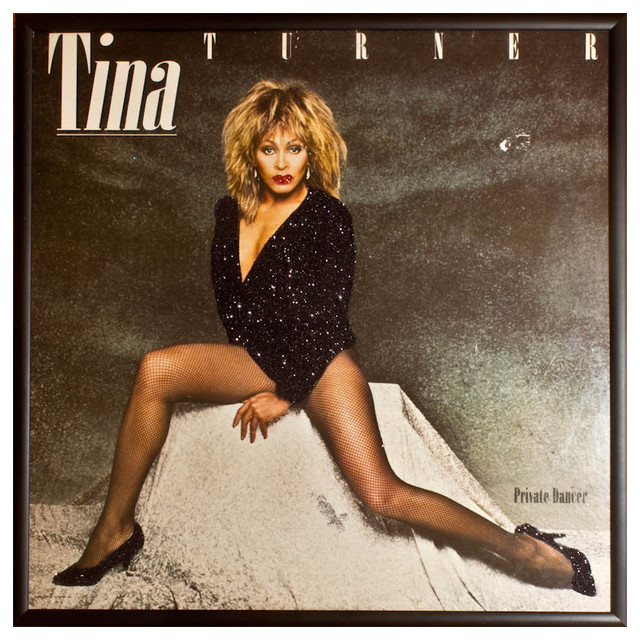
Aug 26 AOTD: Tina Turner - Private Dancer

Aug 26 AOTD: Tina Turner - Private Dancer

1984

Image result for tina turner private dancer album

Link to listen: https://www.youtube.com/watch?v=sdbaDpB9_3w&list=PL7F4952EFF0012323

Back in the 80s, Tina's transformative story from the abused wife of Ike Turner to an independent powerhouse making it on her own was well known.  The album Private Dancer was not just an album packed with big hits; it was her comeback album. She had always been a star too big to remain in the shadow of a blues soul man, especially a megalomaniac like Ike Turner.

Private Dancer seemed to the speak to the arc of her entire career, but especially from this perspective: safe, looking back, and reclaiming her rightful crown of "soul survivor."  Rubert Hine and Terry Britten may have written the hits with her in mind, since Capitol records (not Tina) did hire everyone to make the album to capitalize on the sudden and unexpected success of her cover of Al Green's "Let's Stay Together." But it's the combination of Tina's back story - escaping from Ike with 36 cents to her name back in 1975, working as a cleaning lady to pay bills, having two solo records completely flop, and then rising out of  the ten-year-old ashes of her abandoned career - and that equal-parts plaintive/yearning/threatening voice that packs every song with an emotional conviction that seems like Tina herself is conjuring the words, and is not just interpreting them.

The style of the album fits with other acts/albums from 1984, like Prince's Purple Rain: more anglo-centric than one might expect from a previously blues or soul-focused artist.  The album WAS made in England by two white dudes ... and even Mark Knopfler of Dire Straits is due writing credit on the title song (where Tina sadly states her lonely case as a private escort willing to "do what you want me to do" while keeping her "mind on the money" and keeping her eyes "on the wall."  However, Private Dancer echoes Tina's southern gospel musical roots in "Let's Stay Together" and the soulful rendition of the Beatles' "Help."

"Better Be Good" to me is a personal favorite, a track where Tina seems to be singing to the next Ike-wanna-be that she doesn't take anything at face value. And it's also a great to dance to while mimicking Tina's menacing tone. "What's Love Got to Do With It" won the grammy for Record of the Year, a great look at how attraction sometimes needs a protective, emotion-dismissive plan if a woman (or man) is to survive.  And one last note: check out "Steel Claw," a case for Tina as the hardest rocking woman of the 80s.

In the mid-80s she rivaled Madonna at the top of the charts. It was a long, steep climb from her Nutbush City Limits, so when she sings "Show Some Respect," I have no problem giving it to her.

(Tina Turner is one of my top three favorite women artists of all time - Aretha Franklin and Annie Lennox are the other two.)

Aug 25 AOTD: Tears for Fears - Songs from the Big Chair

Aug 25 AOTD: Tears for Fears - Songs from the Big Chair

1985

Image result for tears for fears songs from the big chair

Link to Listen: https://www.youtube.com/watch?v=Ye7FKc1JQe4&list=PLnjEDtbey337PNuRviP-Z3shH1_OWCDMJ&index=1

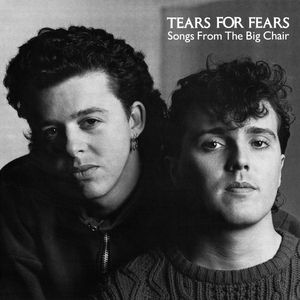
"Songs from the Big Chair" - the phrase itself - is an allusion to the idea of therapy, speaking your fears or trauma aloud to someone while perched on a couch, or "big chair." The first single, "Shout," also is referencing Arthur Janov's "primal therapy," much like the kind that John Lennon also tried and deeply believed in. The British second-single release of "Shout" furthered the idea of speaking to childhood trauma, fears and repression as a way to undo, or release, the pain. And maybe the chanting chorus was also built for just such a purpose.  This single was the follow up to "Everyone Wants to Rule the World" in the States, and by the time "Shout" followed in June of 1985, spending three weeks in the #1 slot, Roland Orzabel and Curt Smith (the duo that was Tears for Fears) WERE essentially ruling the pop world.

The album has a feel of two kinds: first, a reverb drenched pop album - and by pop I mean hummable choruses, soulful singing, and toe-tapping rhythms.  But for the mid-80s - heck, even for now, it's also an alternative British synth-soul album that would only have worked in the 80s alongside fellow pop acts like the Eurythmics and Simple Minds, fellow experimentalists who were striking it big in the same years. This kind of pop experimentation (outside of progressive rock) had never been accepted to this degree and it never would again.

I would love to hear other people's memories associated with these songs.  The singles were so big on the radio in the summer of '85 that everyone has to remember them playing somewhere.  I can still hear "Everyone Wants to Rule the World" playing over the speaker system at the amusement park Valley Fair in Minneapolis, MN, on weekend away from camp, standing in line, singing along with all my camp buddies.  My fondest memory: instead of a usual camp song, I taught my campers "Shout," and then we (probably obnoxiously, now that I think about it) sang/chanted it everywhere we went around camp for a whole week.

Other standouts include "The Working Hour," "I Believe," and "Head Over Heels," another monstrous hit that same summer."

While Curt Smith handled vocals and Bbass, it was really Roland Orzabel who the mastermind of the two.  He wrote the songs, sang and played guitar and keyboards.